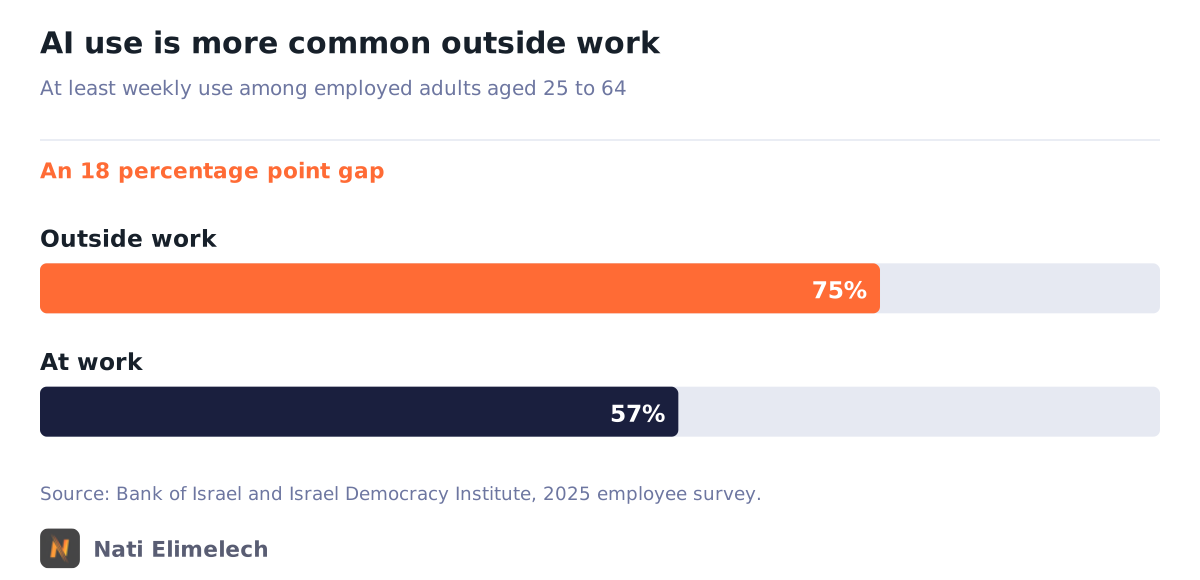
AI adoption in Israel is already widespread, although the rate depends on what a survey counts as use. The Israel Internet Association’s May 2026 index reports ChatGPT use among 88% of Israeli adults and Gemini use among 73%. A separate survey of employed adults aged 25 to 64 found that 57% used AI at work at least weekly, compared with 75% outside work.
These surveys measure tool use among adults and weekly use among workers. Neither measures the percentage of Israeli businesses that have implemented AI.
I’ve brought together the Israeli studies, their dates and methods, followed by US comparison data and an international software-buying survey. Alongside the findings, I explain what I take from them in my work with brands.
Which AI tools are most widely used in Israel?
ChatGPT leads with 88% reported use among Israeli adults, followed by Google’s Gemini at 73% and Microsoft Copilot at 28%, according to the Israel Internet Association’s 2026 index. The publication describes a representative sample of 1,040 respondents surveyed in May 2026. In the released raw data, 367 of the 1,040 respondents reported daily ChatGPT use, about 35% of the full sample.
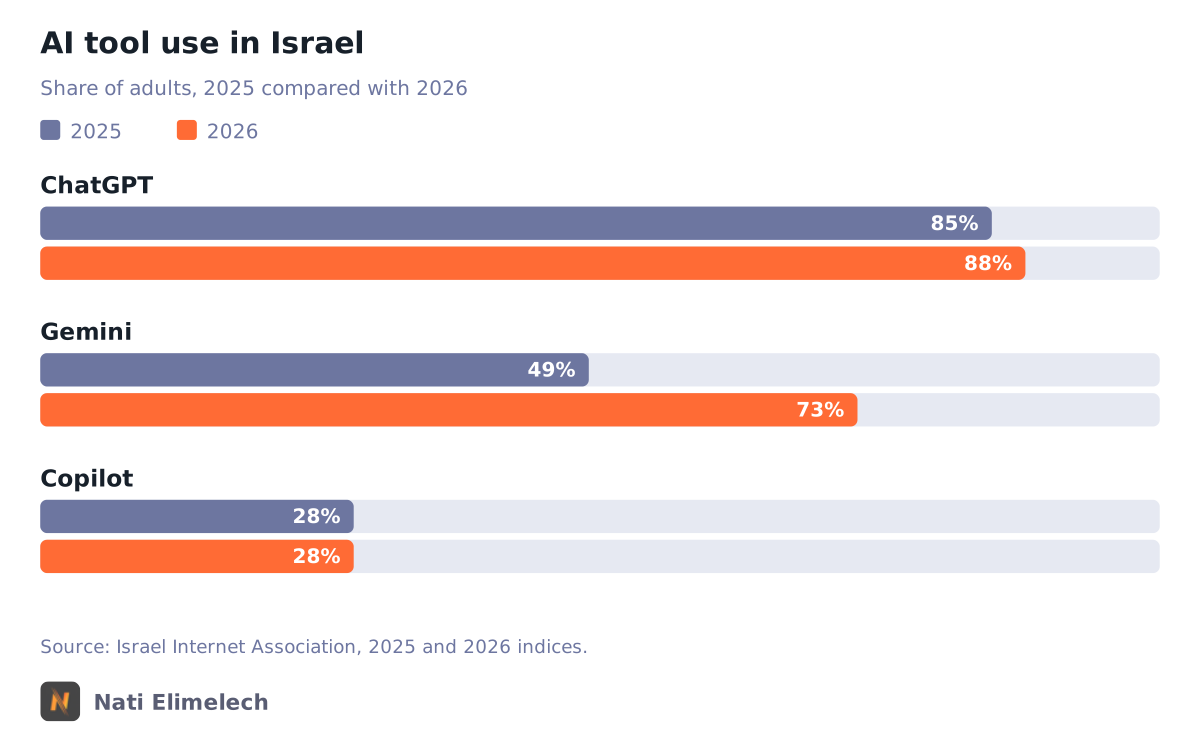
Compared with the 2025 index, ChatGPT use rose from 85% to 88%, Gemini from 49% to 73%, and Copilot remained at 28%. People can use several tools, so these percentages are not market shares that should add up to 100%. איגוד האינטרנט הישראלי: שימוש ברשתות חברתיות ושירותים מקוונים בישראל: נתוני 2025 עם פילוחים דמוגרפיים
I expect Google’s distribution to help Gemini reach more users. Its presence in Gmail, Docs and Drive brings AI into software people already use. Gemini models also power Google Search’s AI Mode and AI Overviews, so people encounter their answers without necessarily opening the Gemini app. For brands, that gives me a reason to check visibility in Gemini and Google’s AI search interfaces alongside ChatGPT. The survey itself does not measure exposure through those interfaces. Google: AI Mode in Google Search: Updates from Google I/O 2025
Microsoft’s position in organisations may help explain some Copilot adoption. In my work with clients, an existing Microsoft 365 environment can make it easier to introduce a tool that fits the organisation’s workflows and data-protection requirements. The survey does not test that explanation.
Who uses AI in Israel?
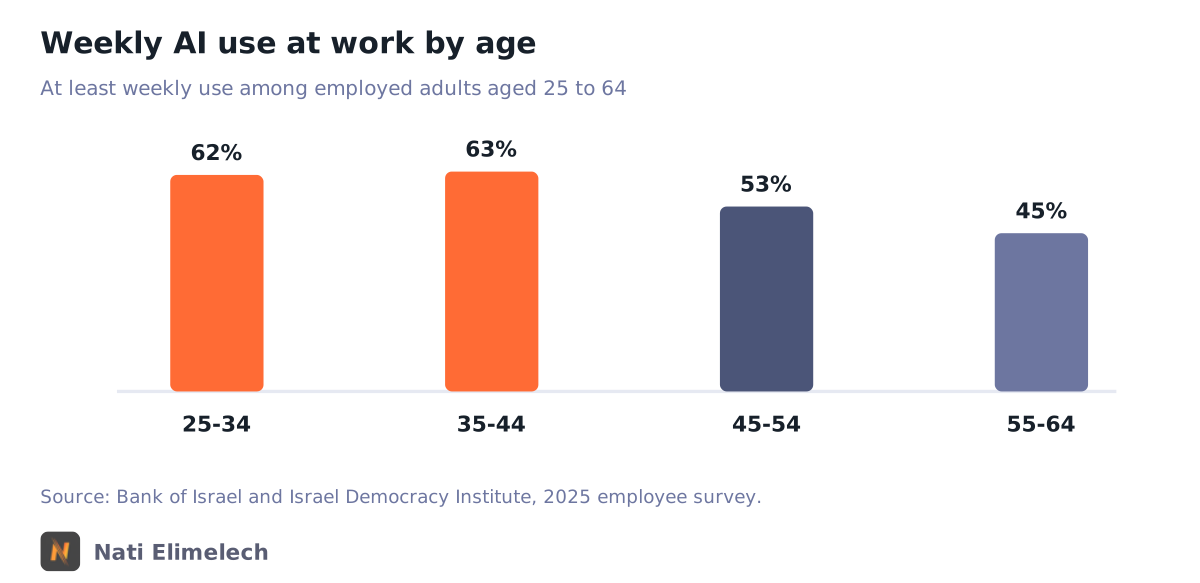
Weekly workplace use varies by age. In the Bank of Israel and Israel Democracy Institute employee survey, 62% of workers aged 25 to 34 used AI at work at least weekly, as did 63% of those aged 35 to 44, 53% of those aged 45 to 54, and 45% of those aged 55 to 64.
The same survey found weekly workplace use among 43% of workers with 12 years of schooling or less, 62% with a non-academic post-secondary qualification, 57% with a bachelor’s degree, and 68% with an advanced degree. By population group, the figures were 59% among non-Haredi Jewish workers, 50% among Arab workers, and 49% among Haredi, or ultra-Orthodox Jewish, workers.
The Internet Association index measures general tool use rather than workplace use. Its 2026 figures put ChatGPT use at 90% among adults aged 18 to 22 and 80% among those aged 60 or older. Reported use was 90% among Arab adults and 88% in the religious and Haredi Jewish group. These results do not contradict the employee survey: the populations, age ranges and definitions of use differ.
How do employees in Israel use AI?
The Bank of Israel and Israel Democracy Institute employee survey covered 1,318 employed adults aged 25 to 64 in November and December 2025. It combined online and telephone interviews and weighted the results against Israel’s Central Bureau of Statistics Labour Force Survey. The study defines frequent use as at least once a week. בנק ישראל: Bank of Israel and Israel Democracy Institute employee survey
At work, 57% reported at least weekly AI use: 26% daily and 31% weekly but less than daily. Outside work, the total was 75%: 42% daily and 33% weekly but less than daily. Awareness was higher still, with 98% of respondents having heard of the tools.
The gap between use outside work and at work was 18 percentage points overall. It was 20 percentage points among non-Haredi Jewish workers, 13 among Arab workers, and six among Haredi workers.
When discussing AI with management, I would not use the pace of the company’s own rollout to judge customers’ familiarity with these tools. The employee survey shows that people may already use AI outside work even when they rarely use it on the job.
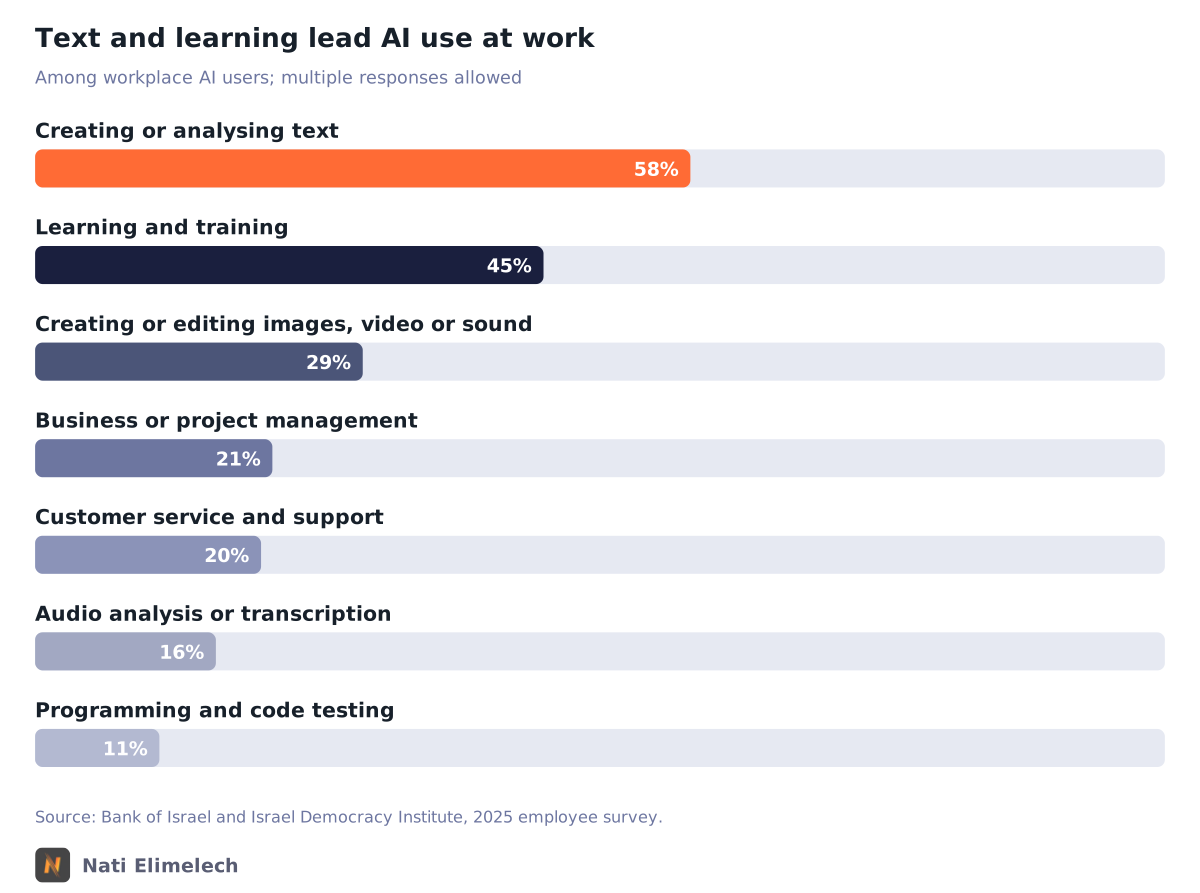
Text and learning were the most common workplace applications. Among workplace AI users, 58% used it to create or analyse text, 45% for learning and training, 29% to create or edit images, video or sound, 21% for business or project management, 20% for customer service, 16% for audio analysis or transcription, and 11% for programming and code testing. Respondents could select multiple uses.
How common is AI use in Israeli high-tech?
A study by the Israel Innovation Authority and the Myers-JDC-Brookdale Institute, published in November 2025, surveyed 523 respondents and weighted results by age, gender and role. The frequency question had 384 respondents: 78% reported using generative AI several times a day and 17% several times a week. רשות החדשנות: study by the Israel Innovation Authority and the Myers-JDC-Brookdale Institute
Participants were recruited through the Innovation Authority’s channels rather than a probability sample. Weighting improves alignment with the high-tech workforce but cannot eliminate possible self-selection bias. The combined 95% figure describes respondents to this frequency question in one sector. It should not be compared directly with the 57% weekly workplace figure from the broader employee survey.
Who pays for AI tools, and what do workers gain?
Among workplace AI users in the employee survey, 75% mainly used free versions. Employers funded tools for 12%, 9% paid themselves, and 4% received funding from another source.
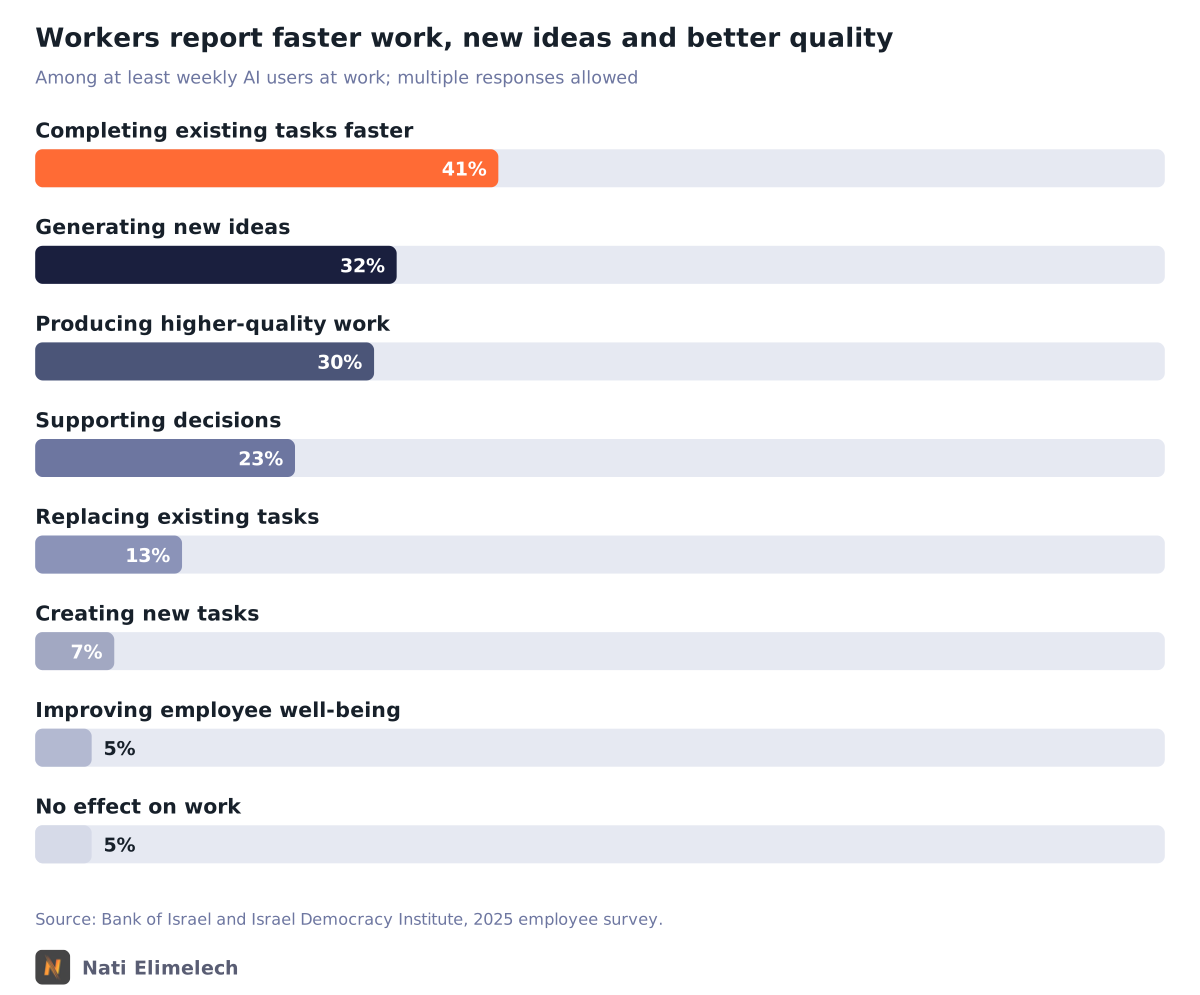
Among workers using AI at least weekly at work, 41% said it helped them complete existing tasks faster, 32% generate new ideas, 30% produce higher-quality work, and 23% make decisions. Multiple responses were allowed. These are workers’ reported benefits, not direct measurements of productivity.
Why do some workers rarely use AI?
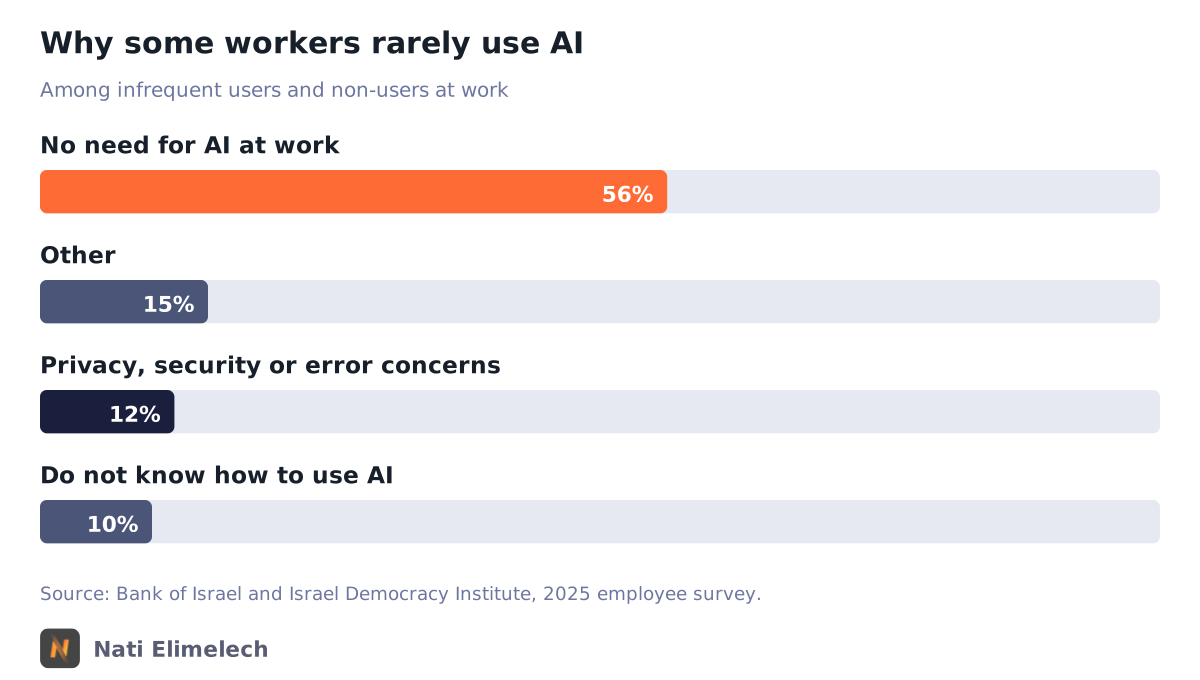
Among infrequent workplace users and non-users, 56% said they had no need for AI at work, according to the employee survey. Another 10% said they did not know how to use it, 12% cited concerns about privacy, security or errors, and 15% selected “other”. The chart shows these reported categories; they do not account for every response. בנק ישראל
What concerns do Israeli workers have about AI?
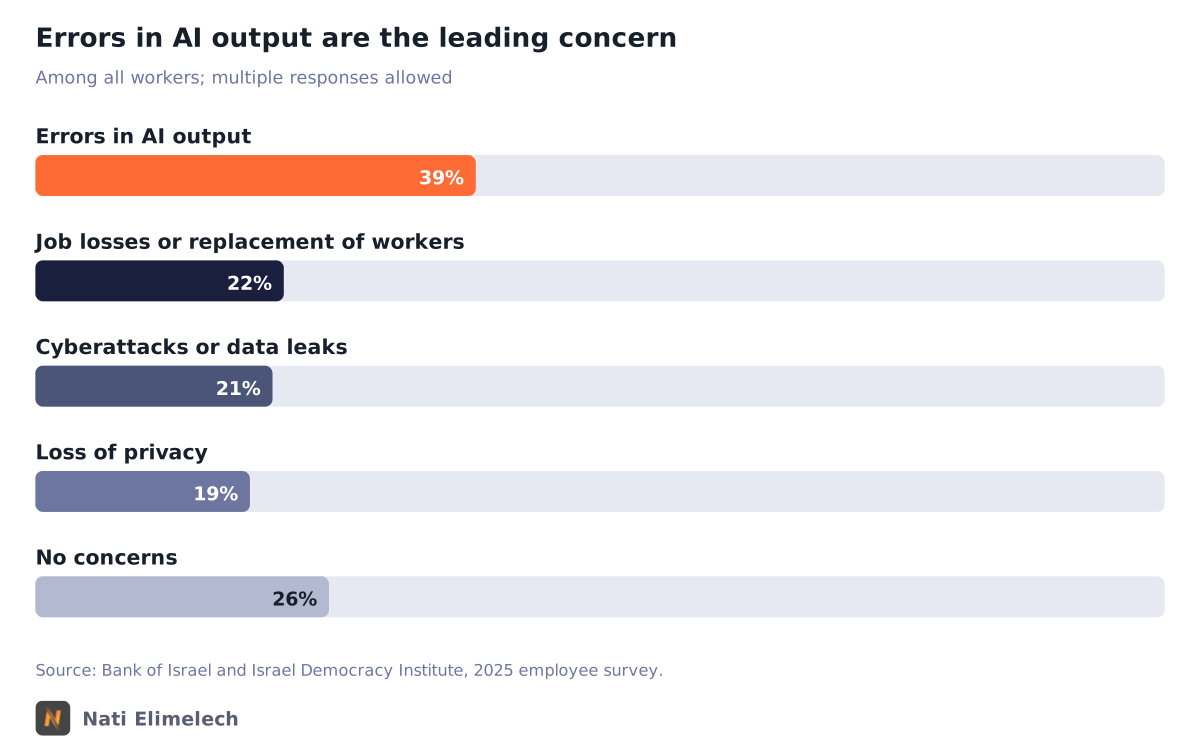
Across all workers in the survey, errors in AI output were the most commonly cited concern, at 39%. Job losses or the replacement of workers followed at 22%, cyberattacks or data leaks at 21%, and loss of privacy at 19%. Respondents could select more than one answer; 26% reported no concerns.
How does Israel compare with the United States?
The Israeli and US surveys offer context, but they are not a harmonised cross-country comparison. The Internet Association reports Israeli adult use of individual tools: ChatGPT at 88%, Gemini at 73%, and Copilot at 28%.
In the United States, Pew Research Center’s 2026 study found that 49% of adults used an AI chatbot, 44% used ChatGPT, and 24% used chatbots daily. It also found that 42% of US adults used chatbots to search for information. Pew surveyed 5,119 US adults in February 2026 and published the findings in June. Pew Research: Americans' Views on AI Chatbots, Smart Devices and AI's Impact
The information-search finding is relevant to SEO and generative engine optimisation (GEO), because it documents chatbot use for an activity that can involve discovering brands. It is US evidence; it does not establish the equivalent rate among Israeli consumers.
How do AI answers affect brand and supplier selection?
G2’s The Answer Economy report surveyed 1,076 people who make or influence business software purchases in March 2026. Respondents came from North America, Europe, the Middle East, Africa and Asia-Pacific. This is an international software-buying survey, not an Israeli market sample. G2: The Answer Economy: G2's 2026 AI Search Insight Report
Among those respondents, 71% used chatbots at some point in software research, and 51% started research with a chatbot more often than with Google. A further 85% said an AI mention improved their opinion of a company. Chatbots had led 69% to choose a different software company from the one originally planned, while 33% bought from a supplier they had never previously heard of.
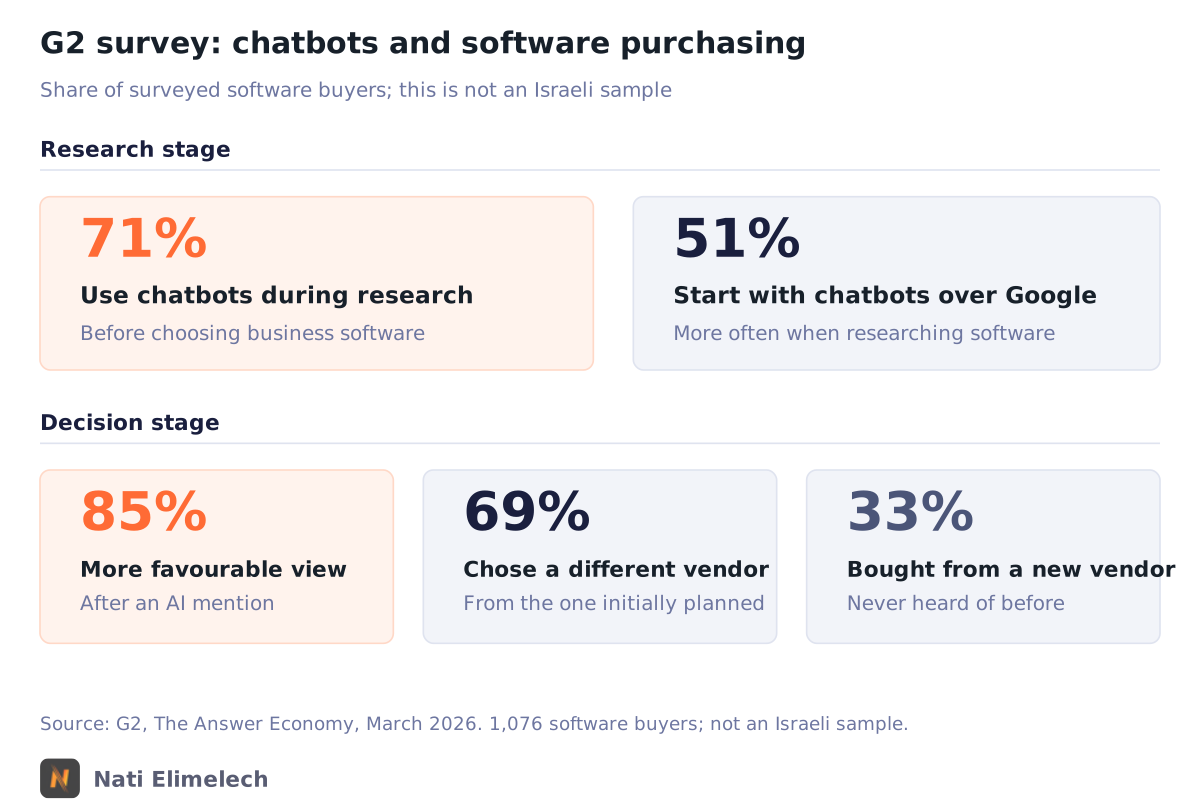
These findings suggest that AI answers can introduce suppliers to a buyer’s shortlist without a prior search for their brand name. In my visibility work, that supports checking questions about categories, needs and comparisons as well as questions about the brand itself. Applying that approach to Israel is a practical inference; G2’s percentages cannot be used as Israeli buying-behaviour estimates.
Sources and methodology
Each study defines adoption differently: general use of a named tool, daily chatbot use, weekly workplace use, or chatbot use during a software purchase. I keep those measures separate rather than combine them into a single AI adoption rate for the Israeli market.
Israel Internet Association, 2026 index: May 2026 fieldwork by Geocartography among 1,040 adults aged 18 or older, described as representative of Israeli society in the survey methodology. Measures use of named tools and daily ChatGPT use.Israel Internet Association, 2025 index: published in January 2026 and covering Israeli adults. Based on periodic representative surveys; the source page does not specify a respondent count.Bank of Israel and Israel Democracy Institute, AI adoption in Israel’s labour market: November–December 2025 fieldwork among 1,318 employed adults aged 25 to 64, including 1,124 online and 194 telephone interviews. Uses quotas and weighting against the 2024 Labour Force Survey, with an enlarged Haredi sample. A discussion draft for the 2026 Eli Hurvitz Conference.Israel Innovation Authority and Myers-JDC-Brookdale Institute, AI and high-tech occupations and employment: November 2025 report based on an online survey of 523 respondents recruited through the authority’s channels. Weighted by age, gender and role using Central Bureau of Statistics data; the frequency question had 384 respondents. Recruitment was not probability-based.Pew Research Center, Americans and AI 2026: fieldwork from 17 to 23 February 2026 among 5,119 US adults; published on 17 June 2026. Asks about use of AI chatbots such as ChatGPT, Gemini and Copilot. US comparison data only.G2, The Answer Economy: March 2026 online survey of 1,076 business software purchase decision-makers and influencers across several world regions. Measures software-buying research and reported purchase outcomes. It is not an Israeli sample.
Links to external sites
isoc.org.ilשימוש ברשתות חברתיות ושירותים מקוונים בישראל: נתוני 2026 עם פילוחים דמוגרפיים
- boi.org.ilBank of Israel and Israel Democracy Institute, AI adoption in Israel’s labour market
innovationisrael.org.ilIsrael Innovation Authority and Myers-JDC-Brookdale Institute, AI and high-tech occupations and employment
pewresearch.orgAmericans' Views on AI Chatbots, Smart Devices and AI's Impact
learn.g2.comThe Answer Economy: G2's 2026 AI Search Insight Report
The Israeli studies establish widespread AI use. They do not measure how much of it involves commercial research or how AI answers affect purchases in Israel.